
Subscribe:







Share this episode:
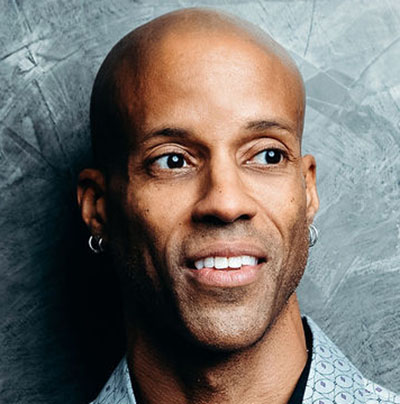
An identity theorist is someone who studies how people come to adopt certain visions or desired images of themselves. It’s a term created by Americus Reed II, Professor of Marketing at the Wharton School of Business. Branding and marketing are fundamentally about persuasion, he says, but both can have implications beyond traditional tactics and thinking. Reed joins the podcast to talk about “identity loyalty” – how a person’s psychological and emotional connection to what a brand means and stands for gets internalized and becomes a part of who they are.
Listen to this podcast episode to learn:
• The upside for brands that are willing to take a leap of faith and relinquish control
• Why “segmentation” and “targeting” aren’t bad things, it just depends on how marketers treat them
• Was Milton Friedman wrong? Or has our moral imperative changed?
• How innovation can be part of a brand’s story and identity
• How to use branding as a meaning system inside a company, to create employee buy-in and strengthen culture
• Amid politicization of brands and business, when (and should) brands take a stand?
• Why consumers are demanding a new skill set in the C-suite: authentic communication of vision and values
For more information: americusreed.com
Transcript for Americus Reed II: Brands and Identity Loyalty
CHARLES TREVAIL: Today I’m here with Americus Reed, who is a professor of marketing at Wharton Business School, part of UPenn. So we’re here in Pennsylvania. Americus, you describe yourself as an identity theorist. That’s your brand.
AMERICUS REED: That’s my brand. That’s a term I made up.
CHARLES: Tell us about that.
AMERICUS: First, thanks for the opportunity, Charles. This is fantastic because I get to put the word out. An identity theorist is a person who is interested in understanding the implications of how people, individuals, humans come to have a sense of who they are. This is a fundamental question that really makes us quite different from just about every other species out there, is that we have the ability to think about the thoughts that we have about who we are and who we want to be. And so an identity theorist is someone who wants to understand the theory of how a person comes to take on certain visions of themselves or certain desired images. Where do these images come from? How do they learn about them? How do they come to have some meaning around what these images should stand for, for them, and to take on those different types of desired identities throughout the life course? So I’m interested in understanding this process at the individual human level.
CHARLES: Right, but you’re in the school of marketing. You’re not in the school of organizational change or psychology. So it is a marketing construct to a degree. But you also have a very interesting concept you call identity loyalty. So this is getting us, I guess, into the world of brand. Tell us the basic thesis around identity loyalty.
AMERICUS: Identity loyalty, Charles, is something that I’ve been fascinated by. It really pushes us as marketers to think beyond repeat purchase. And we try to think, okay, someone might buy something the same over and over and over again. And I think traditionally, people would say, okay, that person’s loyal. And my argument would be that person is loyal to a certain extent. But what is really interesting in terms of a marketing perspective and what a company might be particularly interested in is the idea of how do I get that person loyal, to the extent that they see that brand, that product, that organization, that service as part of who they are. And if they take the brand and not just the what of the brand in terms of its features. But other aspects of the psychological perception of what that brand means and stands for in the marketplace. And they internalize that as part of who they are. Then there’s the potential to become loyal to that brand in terms of how it represents a way to signal to others: this is a brand that communicates something about me that’s deeply personal and deeply emotional. And I call that identity loyalty.
CHARLES: So give us an example of a great company. I mean, I think I know the ones you’re going to talk about. Give us a couple of examples.
AMERICUS: Absolutely. I love to use the brand Nike all the time because they understand that their sort of story is really less about what are the shoes made out of and more about what does it mean to use sport and exercise as a way to transcend who you are. So let’s celebrate life and who you are through sport. That’s the message. And that’s really an identity message. To say that I can take sport and athletics and exercise and activity and just being more active and I can create a sense of empowerment for myself. The switch then becomes a signal that I have some desire to be loyal to that idea, to that mission, that set of values that then can potentially make me really want to wear that Nike swish and not something else.
CHARLES: And so the people who love Nike feel like part of a community. To say that about some brands would sound corny or contrived, but to say that about Nike or perhaps about Apple or about other brands that they kind of love I mean, but some people love Nike, some people love Adidas. Well, let’s just roll back a little bit because there is this concept in business that brand is a manipulation. That it’s something that we’re being asked to pay a brand tax because the things we love, we pay a premium for those things we love. So where’s that idea of this brand manipulation come from?
AMERICUS: The brand manipulation notion I think comes from traditional marketing. The paradigm that a long time ago there was a one way communication channel. I told you what my brand was about, what it does, and you basically believed me because it was basically one way communication. And that’s gone. So nowadays there is a community of cocreators and social media has created the opportunity for other consumers to pressure test your point of view about what you think your brand is about and counter it if they want to in these networks, these communities where they identify and signal to each other who they are about and what they’re interested in. And so now it’s a two-way communication channel. I think there is a legacy of that sort of perception that marketers are just out to get you to buy stuff you don’t want because of the fact that it was such a singular channel of communication. And I think that’s going away now. The way I look at branding is it’s an opportunity to communicate a potential connection with consumers that goes way beyond just what the product is about in terms of what it does and can really transcend and really connect in emotional ways that have to do with how do I allow this person to take on my brand as a symbol. As a badge of identity, as a way to communicate to others something very very powerfully felt about their belief systems. And so now it becomes a question of the consumer’s identity and the brand’s identity and the question of do those things align in a certain way?
CHARLES: So it’s got much more complicated. I mean, in some ways it’s gone beyond two way communication. It’s now three way communication because those consumers are talking to each other without the brands being involved at all. So in some ways, brands have lost control in a formal sense.
Americus: 100% correct. charles, your point is absolutely correct. The great brands have to have the discipline to say, I’m okay with that, because the part that is very scary to them is that losing control means you might lose what it is you’re able to maintain as your brand narrative if you give up that control to a community of consumers. So it’s a leap of faith that you have to take. But I think it’s a big upside in terms of being able to create an identity, loyal consumer.
CHARLES: So this is tough for the brands that don’t have any real connection with their consumers. I mean, I’ll take a consumer goods brand which sells through, I don’t know, Walmart, doesn’t really have any connection. How the hell do they go about doing this?
AMERICUS: Yeah, well, it’s interesting, Charles, because I think there is a spectrum of ability to connect deeply, emotionally, and there are some products, some product categories where it’s just going to be hard to do that. Take an example I talk about my class a lot: toilet paper. You can’t get more mundane than toilet paper, right? It’s like, how do you tell an identity story about toilet paper? One example that I use in my class is that there was a toilet paper brand that started their innovation was that they removed the tube from the toilet paper. So the big idea was we’ve taken out the tube. Oh, and by the way, in doing that, we are being much more friendly to the environment. So this is the toilet paper that is positioned to an individual who has some kind of idea about themselves, about being environmentally friendly. Toilet paper, come on! It’s like you can’t get any more commoditized than that. But yet there’s an opportunity, even in that category to create something that might have some self expressive or value based connotations to it.
CHARLES: Interesting. So you have to work harder, probably at the innovation level, perhaps at the absolute kind of everyday utility of what that product is designed to deliver. It’s hard work.
AMERICUS: It’s very hard work. And we talked about it earlier when we were having a conversation offline Charles, that this idea of you pointing this out, maybe companies should not lose sight of the innovation piece and just making their stuff better and being able to get in line with technology. My argument would be that they can do that and maybe that technological innovation can be part of A story that can have this more Emotional, self identity based connection to potential group of consumers.
CHARLES: Yeah, I’m sure that is true. I was speaking to CEO of Patagonia and she was talking about this subject. Having a Purpose was great, but she said you have to have great products, you have to have a motivated team of people behind it, and you have to understand your consumers. Those are all absolutely mandatory. The fact they have a great purpose makes it even more powerful. It’s not at the expense of great products, motivated people, understanding your consumers.
AMERICUS: That’s exactly right. One of the quotes that I always use a lot is that the worst thing that can happen to a bad product is good marketing. And it’s that idea. It’s like there are certain table stakes. You just got to be able to deliver on quality and certain aspects of what you’re doing. But you make a great Point which is above and beyond that, ceteris paribus, this might be the difference between a consumer saying, well, these two things are pretty much the same, but I believe Patagonia is more aligned with my view of the world and how we should be treating this planet.
CHARLES: So brands face in two directions. They face sort of outside the organization and they face inside. You describe brands as meaning systems. This must be incredibly important for employees.
AMERICUS It’s huge. It’s huge. It’s very interesting. When I’ve talked to companies over the years, Charles, what I’ve found is that almost every single one has told me, listen, we think we have of our brand, right? And sometimes they’re wrong about that, that’s fine. But what almost every single company has told me is like, help me make sure that our brand is internalized by the employees. How do we get the employees to buy into our vision? And I think that’s one area that is kind of underestimated in terms of the power of values based emphasis in terms of a meaning system of a brand. And to say that if we can get the people inside the four walls of the building to buy in and believe at the same level as we would expect, identity, loyal brand evangelist, customer out there, then we’re creating the opportunity to build this thing Inside Out, right? So to speak. We talk about your show Outside In. It’s kind of like this idea. This is inside out. It’s like starts here and if the people believe it, if the people eat, sleep and breathe these values and believe what you’re doing, there’s all kinds of really important aspects that will create an opportunity to have that emanate to the outside world in a very authentic way.
CHARLES: So marketing and branding, two different constructs. You’re a brand guy, although you’re…you’re an identity guy. Yes, but you’re in the marketing faculty here. Yes. It feels to me some of the language used by marketing still today comes from another era. And I’ve heard you talk about teaching a class where things like segmentation and targeting are still talked about. I find it difficult to reconcile everything you’ve talked about identity, consumer, emotion, and targeting — which is almost a military concept. So I don’t know. I’ve been grappling with this problem for 30 years, I guess, and I wonder if you’ve managed to reconcile the kind of hard, data driven world of marketing and the emotional human world of branding.
AMERICUS: Yes. It’s a very interesting point of potential contention, Charles, that you bring up. I’ve been grappling with it as well. I guess the way that I look at it is that there is a kind of common language we use segmentation, targeting, positioning, and messaging. And that’s just our vocabulary. For me, I try to kind of cognitively reappraise those terms. So for me, segmentation, which sounds like a very kind of clinical, surgical kind of a thing, is actually an understanding of who is it from a sociological point of view that I can potentially really connect with. And so for me, segmentation is all about, almost that Jane Goodall exercise where you try to go into the jungle and, like, live with these people and understand their lives from a 360 view, every possible aspect about who they are, and then that gives you some clarity around, well, who do I want to really try to connect with? That’s what the way I think about segmentation.
CHARLES: So when I think of segmentation, I think of people doing huge quant exercises with tons of data and ending up with a complicated looking segmentation chart.
AMERICUS: That’s right, a complicated looking segmentation chart. And then here’s the persona. This is David. He has 2.6 kids. And what you end up with is something that’s not even real. So from my perspective, it’s like, let’s actually put these consumers and I think this is consistent with your view, Charles. Let’s put these consumers first. Let’s start with trying to understand them, not in some gimmicky way, but in a way that is sociologically true to who they are and how they operate out there in the world.
CHARLES: Let’s talk a little bit about purpose and what’s going on in this whole kind of political politicized debate. I don’t mind which examples we talk about here at Americus’s, but I think of Walmart and guns. Or maybe if we make it easier, we go offshore a little bit or think about Cafe Pacific and what’s going on in Hong Kong and people resigning from Cafe. How do companies try and reconcile this fast changing world that we live in and the politicization of brands and businesses? I mean, is the advice to dive in and get involved and take a stand, or is the advice to stand back, or is it case by case?
AMERICUS: You’re pointing to something very important, Charles. It is case by case. You have at least two examples. One example is a case where what you’re doing, your business model, somehow involves some moral issue. So, for example, if you’re selling guns or you’re selling tobacco, your CVS, and you say, I’m going to stop selling tobacco products because I need to take a moral stand, that’s one thing. That’s sort of a direct connection. Then you have other examples where you might have a stand that you might take as a company that has nothing to do with your own product, what you’re doing. A great example, I think about that as Chickfila kind of came out and basically said, “we have Christian values and we don’t think that a marriage should be defined outside of a man and a woman.” And they made that statement, and there was a huge uproar because this is who they are 52 days out of the year. They’re closed on Sundays. They believe this. They hire from these kind of local churches for these young kids to work in the restaurants. That was something they believed, but they quickly realized that, hey, you know what? It has nothing to do with our chicken. And the LGBTQ community has, like, $1 trillion in disposable income, so that’s leaving a lot of chicken on the table. So for them, there’s sometimes this moral question, but also kind of a business question I think companies grapple with. Where should I come in on that? And it’s something that they’re going to have to think through very carefully.
CHARLES: Yeah. So, you know, the business roundtable of the 192 CEOs have just come out and said, Milton Friedman was wrong. It took a while, but they’ve come out and they said, Milton Friedman was wrong. Shareholder value is not the only thing that should drive a business. That, I guess, stakeholder value, or whatever you want to call it. But Collins and Porras wrote, Built to Last twenty years ago. Now, is this a PR exercise, do you think? Or is there real teeth in this statement? What’s your view on that?
AMERICUS: My view is that there is real teeth in this state. Right. I believe that taking a consumer view, trying to understand the stakeholder value and the consumer value as a necessary sort of important thing that you have to look at before you even think about shareholder value. I think it’s important because I think without the first two, you’re not going to get as far as you can with the third. So in some sense, it’s like a sequential analysis.
CHARLES: Actually, what you’re saying is there is a pretty big shift because Milton Friedman almost made it a moral imperative to make money first. What is now happening, it’s a moral imperative to be a good citizen to all of your stakeholders first. If one sees it like that, it is a really significant shift.
AMERICUS: It’s a significant shift and it’s a strategic decision to be more long term focused. Right. So you’re not maximum. And this is hard for brand managers because at the end of the day, the higher ups are going to want to know, what were your sales last quarter? That’s right. And so implementing something that’s a bit more as a longer term pay off is much more harder to do because you’re being evaluated on short term metrics. So taking these more identity based, values based, let’s connect, let’s make sure we’re doing the right thing and then let the opportunity and the outcome happened because of that is a very, very difficult thing to take on.
CHARLES: You must deal with marketing departments of big companies all the time. What’s the biggest single piece of advice you could give those people in terms of when we all hear from companies? Well, brand is a marketing construct. Brand is still about advertising and logos and direct marketing and packaging. And that’s what branding is about. I mean, how do we change that? How do we put that to bed as like an old idea from the 20th century? How do we change that?
AMERICUS: We change it by having a broader understanding of what we’re doing. Every single thing you just mentioned, Charles, is a tactic. Yes. And that’s different from a strategy. A strategy says, I want to become deeply connected with a community of consumers. I need to define who they are. I need to understand who they are. I need to know where they are. They’re going to call that targeting. I need to position who I am to them. That makes me different from other things that are close competitors and I need to message to them, I need to tell them my story. Right. So when you take a broader perspective on that, you’re actually able to much more focus on kind of making that connection as opposed to making a dollar. The dollar will come. When you make this identity loyalty connection with the consumer, when a competitor comes in and tries to offer something, I’m going to drop price. It doesn’t work because the entire connection is not based on a financial argument, it’s based on something else. And so for a competitor to come in and say to an identity loyal customer, please come on my side, you’re asking that customer to change who they are. And that’s a fundamentally different and quite difficult exercise because you’re creating a psychological inertia. You’re creating a sense of connection that’s deeply based on self expression and values.
CHARLES: How do we get the people at the tops of organization to really understand their customers and the worlds their customers? Because if you don’t have that connection and understanding, you’re going to make wrong moves. You’re going to have blind spots you don’t understand. How do we get them to understand that little way. I mean, the people at Nike do. They get it right. The people at Apple do. The people at Starbucks do. But the gap between the ones who really get it and the ones who don’t seems to be growing.
AMERICUS: It’s a big problem that you’re pointing to, Charles. I think one thing that will help is that younger strategists that come into the C suite are going to get it more because they’re going to come from a perspective of, like, social media has taught me that I need to know. This is actually another really interesting aspect about this, Charles. The CEO, and all these C Suite folks that you study and analyze very rigorously, they used to be like anonymous people. You never saw who they are, never knew who they are. Now we live in a world where part of what you’re going to be doing in the C suite is communicating the vision. And in fact, consumers are going to demand that. We want to know what you stand for, Uber. We want to know how you’re treating people, Walmart. We want to understand all of these things. And now the CEO and CMO c-suite folks have to add another skill set, which is the ability to come out and communicate those values in an authentic way. So it’s completely changed in that there’s no way to hide. There’s no way to hide.
CHARLES: Nowhere to hide. The other thing I really hope is that more people at Wharton come through your course and they end up figuring this stuff out.
AMERICUS: I preach it all the time, every time. What is branding and marketing? It’s basically persuasion. And it’s like, I have something I want to say to you. I want to make you believe it and join me in this movement that I am trying to create. That’s really what great marketing is all about.
CHARLES: Fantastic, Americus. This has been a really, really wonderful discussion, and I want to come back and do more with you. Excellent. I’m sure our listeners have loved this 20 minutes, 25 minutes we’ve had together, but let’s do another one.
AMERICUS: Absolutely. I appreciate the time. Thanks very much, Charles.